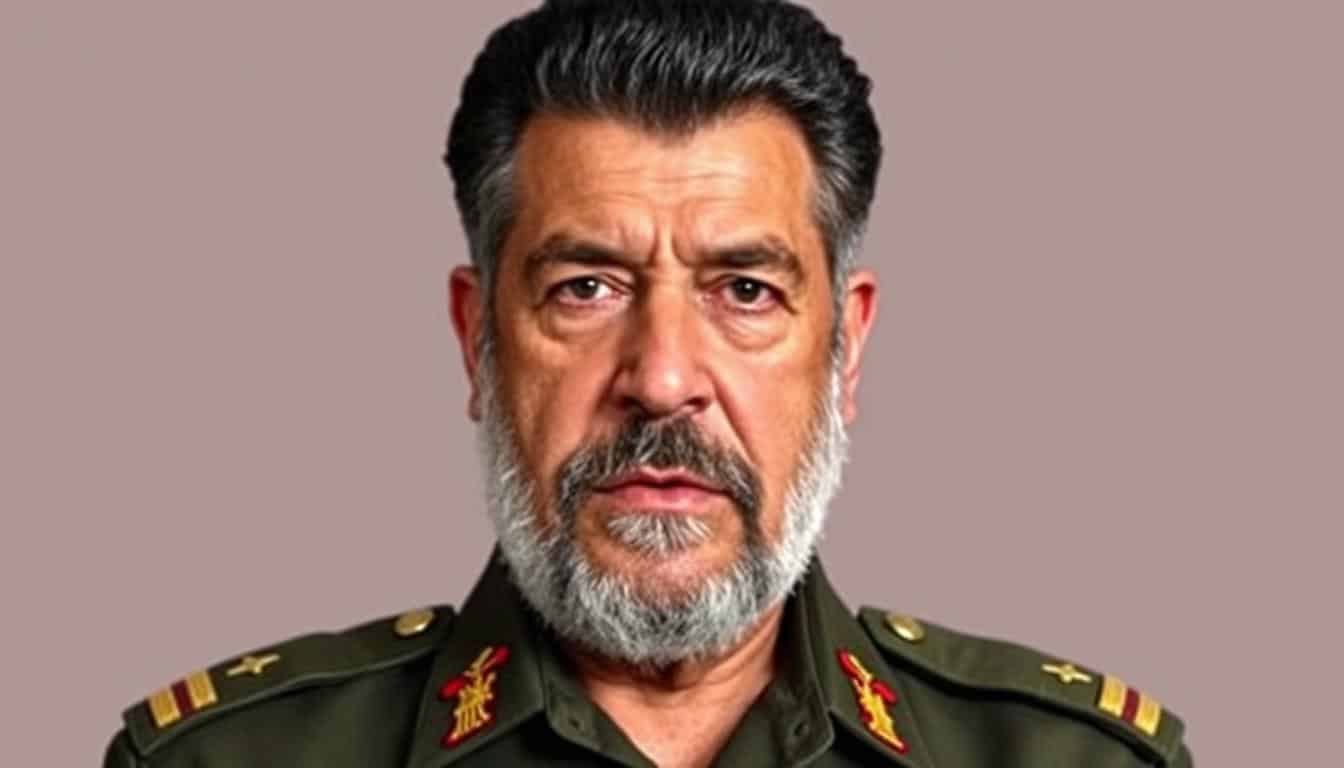
Saddam Hussein transformed Iraq through ruthless ambition and strategic manipulation. Born into poverty near Tikrit, he became one of modern history’s most controversial leaders, and his rise from obscurity to absolute power reshaped Iraq and global geopolitics. He ruled Iraq for nearly 30 years before being overthrown in 2003 by the US Coalition.
As Iraq’s dictator, Hussein used brutal force and calculated political moves to maintain control. His regime became known for oppression and resilience against international pressure, and his story reveals the complex interplay of power, ideology, and regional dynamics in the Middle East.
Key Takeaways
- Saddam Hussein emerged from humble beginnings to become Iraq’s most powerful dictator.
- His regime was characterized by extreme political repression and strategic manipulation.
- The U.S. invasion in 2003 ultimately led to his downfall and execution.
- His leadership profoundly impacted Iraq’s political and social landscape.
- The consequences of his rule continue to resonate in Middle Eastern geopolitics.
The Early Years of Saddam Hussein
Saddam Hussein was born on April 28, 1937, near Tikrit, Iraq. He grew up in a harsh environment, and this upbringing shaped his future ambitions.
Childhood Struggles and Family Background
Hussein’s early life was full of hardship. Orphaned at a young age, he was raised by an uncle who held strong political opinions, and the family faced economic struggles and social exclusion. These experiences deeply influenced his worldview.
- Born in a rural mud-brick village near Tikrit
- Experienced poverty and social exclusion
- Raised by an uncle with strong political opinions
Initial Political Awakening
Young Saddam showed strong political determination early on. In 1957, he joined the Ba’ath Party, a key moment in his development. His radical political engagement became clear in 1959, when he took part in an assassination attempt against Iraqi leader Abdul Karim Kassem.
The Ba’ath Party and Political Ascendancy
The Ba’ath Party promoted pan-Arab nationalism and socialist ideas, and it became the vehicle for Hussein’s climb. He participated in underground political activities and demonstrated exceptional organizational skills.
Saddam played a key role in the 1968 coup that brought the Ba’ath Party to power in Iraq. By 1979, he had become president through calculated political moves.
| Political Achievement | Year |
|---|---|
| Ba’ath Party coup | 1968 |
| Became Vice President | 1969 |
| Became President | 1979 |
Kurdish Challenges and Confrontations
The Kurdish population posed a major challenge to Saddam’s rule. His harsh response was clear in the Anfal campaign, a brutal operation that killed an estimated 50,000 to 100,000 Kurds and showed how merciless his leadership was in handling internal conflicts.
The Iraq-Iran War: A Turning Point
In September 1980, Saddam Hussein launched a massive invasion of Iran. The main reasons for the attack included territorial disputes along the border, religious and ethnic rivalries, strategic control of regional resources, and an opportunistic bid to expand Iraq’s political influence.
The war took a huge toll on both nations. Hundreds of thousands died during the eight-year conflict, and Iraq’s military campaign drained vast economic resources, weakening the country’s infrastructure and economic stability. The United States and other Western nations gave some support to Iraq, seeing the conflict as a way to check Iran’s revolutionary regime. The war’s aftermath shaped Iraq’s future foreign policy and set the stage for later military actions in the region.
The Gulf War: Invasion and Consequences
Saddam Hussein’s invasion of Kuwait on August 2, 1990, sparked global tensions and international condemnation. The United States assembled a diverse multinational coalition, and Operation Desert Storm quickly pushed Iraqi forces out of Kuwait through military operations from January to February 1991.
The consequences were far-reaching. UN sanctions on Iraq created severe humanitarian challenges: over 500,000 children died due to sanctions between 1991 and 2003. Iraq’s economy crumbled under the pressure, and oil exports became its primary means of survival, accounting for over 90% of government revenue.
Authoritarian Regime: Control and Propaganda
Saddam’s regime mastered absolute control through systems that reached into every corner of Iraqi society. He created a network of security services to monitor citizens, backed by extensive secret police networks, comprehensive surveillance, and brutal punishment for dissent.
State-controlled media spread government narratives; every broadcast, newspaper, and radio program was carefully curated to project an image of absolute power. Saddam turned himself into an almost mythical figure, with his portraits displayed everywhere from government buildings to homes. Criticizing the dictator became extremely dangerous, which effectively silenced potential opposition.
Human Rights Violations Under Saddam
Saddam’s government committed systematic abuses against its own citizens. The most notorious incident was the 1988 chemical weapons attack on Kurdish civilians in Halabja, which killed thousands of innocent people. Mass executions of political opponents, systematic torture of detainees, forced displacement of ethnic minorities, and suppression of political dissent were widespread.
| Type of Violation | Estimated Victims |
|---|---|
| Chemical weapon attacks | More than 5,000 Kurdish civilians |
| Political executions | Estimated 50,000 to 100,000 |
| Forced disappearances | Thousands of individuals |
Global human rights organizations highlighted the systematic oppression, and the United Nations and other international bodies repeatedly condemned these actions, creating significant diplomatic pressure against the Iraqi regime.
The Fall of Saddam Hussein: U.S. Invasion of Iraq
The September 11, 2001 terrorist attacks heightened American national security concerns. In October 2002, Congress authorized the potential use of military force, and on February 5, 2003, Colin Powell delivered a controversial speech to the UN about weapons of mass destruction. Intelligence reports claimed Iraq had biological weapons, though those claims were later questioned.
On December 13, 2003, Saddam Hussein was captured near Tikrit, hiding in a small underground hole. The invasion divided international opinion: some countries backed the removal of a dictator, while others saw the action as against international law.
Saddam’s Trial and Sentencing
Saddam Hussein’s trial was a crucial moment in Iraqi history, and the legal process encountered serious obstacles, including the murder of three defense lawyers, the resignation of multiple judges, and Saddam’s defiant courtroom behavior.
The main charges focused on the Dujail massacre. Saddam was found guilty of crimes against humanity for the killing of 148 Shiite Muslims in 1982.
| Event | Date | Location |
|---|---|---|
| Trial began | October 19, 2005 | Baghdad, Iraq |
| Sentencing | November 5, 2006 | Iraqi Special Tribunal |
| Execution | December 30, 2006 | Camp Justice, Baghdad |
The execution happened at about 6:00 AM local time. Public reaction was deeply divided: many Shiites and Kurds saw the trial as justice for years of oppression, while Sunni communities loyal to Saddam viewed it as politically motivated international intervention.
Impact of Saddam’s Regime on Iraq
Saddam’s rule and the conflicts that followed left deep scars on Iraq: massive population displacement, widespread economic collapse, and the destruction of critical infrastructure. The regime’s brutal tactics worsened existing ethnic tensions and created deep rifts within Iraqi society.
| Impact Category | Quantitative Measure |
|---|---|
| Population displacement | 4 million Iraqis displaced |
| Civilian casualties | Over 1 million deaths |
Saddam’s removal created a power vacuum that contributed to the rise of Al-Qaeda in Iraq and to fractured governance along ethnic and sectarian lines. Over 1 million Iraqis remain displaced within the country, and many refugees have sought safety in neighboring nations. Rebuilding Iraq remains an ongoing challenge that requires substantial international investment and commitment.
FAQ
How did Saddam Hussein rise to power?
He climbed the ranks of Iraq’s Ba’ath Party through cunning and violence, playing a key role in the 1968 coup that positioned him as a major player in Iraqi politics before he became president in 1979.
What were the major conflicts during Saddam’s regime?
The Iraq-Iran War, an eight-year conflict that caused massive losses, and the Gulf War, which began with Iraq’s invasion of Kuwait and led to international intervention.
What were the most serious human rights violations under his regime?
The 1988 chemical attack on Halabja, systematic torture, mass executions, and widespread political persecution. The Kurdish population faced especially severe repression.
Why did the United States invade Iraq in 2003?
The invasion aimed to remove Saddam from power and end his regime’s abuses, and it was justified by claims that Iraq held weapons of mass destruction.
What happened to Saddam Hussein after his capture?
Captured on December 13, 2003, he was put on trial for crimes against humanity, found guilty, and executed on December 30, 2006. The trial sparked controversy and mixed reactions worldwide.
What was the impact of his regime on Iraq’s long-term stability?
His rule left economic ruin and sectarian divisions, and his fall created a power vacuum that fed ongoing instability, the rise of terrorist groups, and continued political tensions.